
There is a moment that many women describe in almost exactly the same words. You wake at three in the morning, heart pounding, drenched in sweat, and you lie there in the dark wondering what on earth is happening to your body. Or perhaps it is not the night sweats, perhaps it is the anxiety that arrives out of nowhere on an ordinary Tuesday, or the brain fog that makes you search for a word you have used a thousand times, or the tears that come for no reason you can explain, or the exhaustion that sleep does not seem to touch.
Perimenopause can feel like a stranger has moved into your body. And for many women, the hardest part is not the symptoms themselves, it is the sense that nobody is quite listening to the full picture of what you are experiencing.
I am Carole Sanders, a classical homeopath with over 35 years of experience. I have been supporting women through perimenopause for most of my professional life, and in all that time, one thing has remained constant: every woman’s experience of this transition is completely her own. That is not a complication. In classical homeopathy, it is the starting point.
What Perimenopause Actually Is, And Why It Feels So Unpredictable
Perimenopause is the transition phase leading up to the menopause, the point at which your periods have stopped for twelve consecutive months. This transition can begin as early as your late thirties or as late as your mid-fifties, and it can last anywhere from two years to more than a decade. For most women, it falls somewhere in the middle of that range, unfolding gradually over five to seven years.
During this time, the levels of oestrogen and progesterone in your body begin to fluctuate, not in a smooth, predictable decline, but in waves and dips that can vary enormously from month to month. It is this unpredictability that drives the wide range of symptoms women experience, and it is why perimenopause can feel so difficult to get on top of.
What is less often talked about is the way these hormonal changes interact with everything else that is going on in a woman’s life, her stress levels, her sleep, her emotional history, her constitution, and the particular way her body has always responded to change. Two women can have exactly the same hormonal picture and have completely different experiences. One might sail through with little more than slightly irregular periods. Another might find her daily life significantly disrupted for years. Both experiences are real, both are valid, and both deserve proper attention.
The Symptoms Women Bring to Me
Over 35 years of practice, I have supported women through every aspect of the perimenopausal transition. The symptoms that bring women to my door are varied, and they rarely arrive one at a time.
Hot flushes and night sweats are perhaps the most well-known, but even these vary enormously. One woman experiences a wave of burning heat rising from her chest, accompanied by a racing heart and a flash of irritability. Another feels a gentler warmth, leaving her pale and exhausted and longing for someone to understand how depleted she feels. These are not the same symptom. In classical homeopathy, they point to different remedies entirely.
Sleep disturbance is one of the symptoms women find most debilitating, not just the night sweats that wake them, but the difficulty falling asleep, the mind that races at two in the morning, the sleep that does not restore. Many women tell me they feel as though they are functioning at a fraction of their usual capacity, and that the cumulative effect of poor sleep is affecting every part of their life.
Mood changes during perimenopause are real, common, and often deeply unsettling for women who have always felt emotionally steady. Anxiety that arrives for no apparent reason. Irritability that feels disproportionate to what triggered it. A low mood that sits just beneath the surface. Sudden tearfulness. A loss of the lightness that used to come naturally. These emotional shifts are not a sign that something is wrong with you, they are part of the hormonal picture, and they respond beautifully to well-chosen homeopathic treatment.
Brain fog and poor concentration, the inability to find words, the sense that your mind is working through treacle, the forgetting of things you would never normally forget, affect many women during perimenopause and can be particularly frightening. Women sometimes worry that something more serious is wrong. In most cases, it is the hormonal transition, and it can be supported.
Irregular or heavy periods, joint aches and pains, changes in libido, fatigue that rest does not touch, digestive changes, skin and hair changes, all of these can be part of the perimenopausal picture, and all of them are part of what I look at when I work with a woman during this time.
But perhaps the symptom I hear most often, underneath all the others, is simply this: I don’t feel like myself anymore. That loss of the sense of who you are, your confidence, your energy, your joy, is something that matters deeply. And it is something that classical homeopathy is very well placed to address.
How Classical Homeopathy Approaches Perimenopause Differently
Classical homeopathy, also called unicist homeopathy, works on a principle that sets it apart from most other approaches to health: the principle that each person must be understood and treated as a whole individual, not as a collection of symptoms to be managed separately.
This means that when a woman comes to see me about perimenopause, I am not looking for the remedy that treats hot flushes, or the remedy that treats anxiety, or the remedy that treats sleep disturbance. I am looking for the single remedy that fits her, her particular combination of symptoms, her constitution, her history, her emotional life, and the way she experiences and expresses her own health.
I treat the person, not the disease. This is something I have believed deeply since the very beginning of my practice, and it is what makes homeopathy so effective for perimenopause, a condition that is, by its very nature, deeply personal and highly individual.
There is no standard protocol. There is no list of remedies that work for perimenopause in the same way that there is a list of medications that manage hormonal symptoms. Instead, there is careful, unhurried listening. There is attention to the details that make you you. And from that, there is a remedy chosen specifically for where you are right now.
What to Expect in a Consultation
A first consultation with me lasts approximately an hour and a half. This is not a rushed appointment, and there are no questions that are irrelevant or too small to mention.
We begin with what you are experiencing now, the symptoms that have brought you to seek support, in as much detail as you want to give. How do the symptoms feel? When are they worse? What makes them better? How do they affect your daily life and your sense of yourself?
From there, we move into your broader health history. I am interested in the whole arc of your health, not just the perimenopause, but the patterns that have been present throughout your life. What illnesses have you had? How has your body tended to respond to stress, to change, to illness? What has always been true about you physically and emotionally?
I will also ask you questions that may seem unexpected, about your sleep patterns in detail, about your food preferences and aversions, about your reactions to heat and cold, about your dreams, about the things that make you feel better or worse that have nothing to do with conventional medical categories. These details matter in classical homeopathy. They are part of the picture that helps me find the right remedy for you specifically.
The consultation can take place in person at my home clinic in Nyons, in the beautiful Drôme region of Provence, or online via video call for women across the UK, France, Canada, the United States, and beyond. Around half of my consultations already take place online, and I find it works extremely well, many women appreciate the ease of consulting from home, particularly when they are managing demanding lives alongside their symptoms.
Can Homeopathy Be Used Alongside HRT?
Yes, absolutely. Classical homeopathy does not interfere with conventional medical treatment, and I regularly work alongside women who are also using HRT or other medical support.
For some women, homeopathy is their primary approach, they prefer a natural, individualised route and want to explore that before considering hormonal treatment. For others, homeopathy complements HRT, addressing the symptoms that hormones alone do not fully resolve, or supporting the emotional and constitutional dimensions of the transition that lie outside the scope of hormone therapy. For others still, homeopathy provides a bridge, supporting them through the early stages of perimenopause while they consider their options, or helping with the process of coming off HRT when the time feels right.
There is no right or wrong answer here. The conversation about perimenopause and how to support it is evolving rapidly, and every woman’s situation is different. My role is not to tell you what to do, but to offer the best individualised support I can for wherever you are in your journey.
The Role of Mindfulness
I have practised and taught mindfulness for many years, and I have observed something consistently in my work with women going through perimenopause: those who develop a regular mindfulness practice tend to navigate this transition with greater steadiness, not because mindfulness eliminates the symptoms, but because it changes the relationship with them.
Sleep improves when the mind is less agitated at bedtime. Anxiety becomes less overwhelming when there is a practice for meeting it with steadiness rather than resistance. The emotional intensity of perimenopause becomes more workable when there is a genuine space to pause and observe, rather than simply react.
I run a meditation group in Nyons and offer mindfulness support alongside homeopathic treatment for women who are interested. It is never a replacement for the homeopathy, it is a complement to it, and for many women it becomes a practice they continue long after the perimenopausal transition has passed.
You Do Not Have to Simply Manage This
Perimenopause is a significant transition, and it deserves proper, unhurried, individualised support. You do not have to simply manage your symptoms, push through, or accept that this is just how things are going to be for the next several years.
If you are experiencing perimenopausal symptoms and you are looking for a holistic approach that treats you as a whole person, not just a hormonal profile, I would be very glad to speak with you.
To book a first consultation or to find out more, please visit www.bvch.co.uk (UK and international) or www.bvch.fr (France and in-person in Nyons).
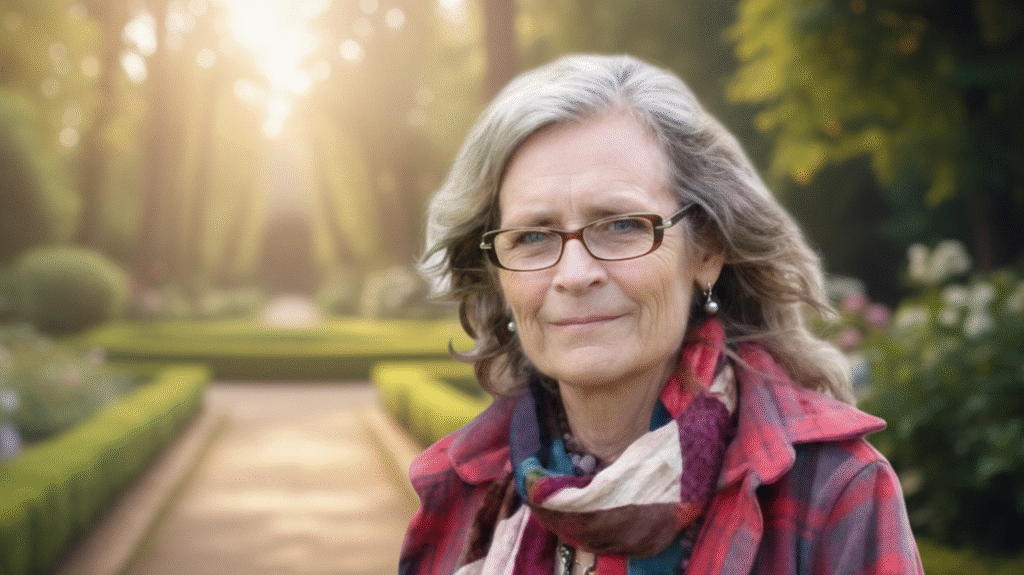
Carole Sanders RSHom is a classical homeopath with over 35 years of experience. She trained at the London College of Classical Homoeopathy and has been in full-time practice since 1993. She offers online consultations across the UK, Canada, and the USA, and in-person and online consultations from her home clinic in Nyons, Drôme, Provence, France.